
視 頻
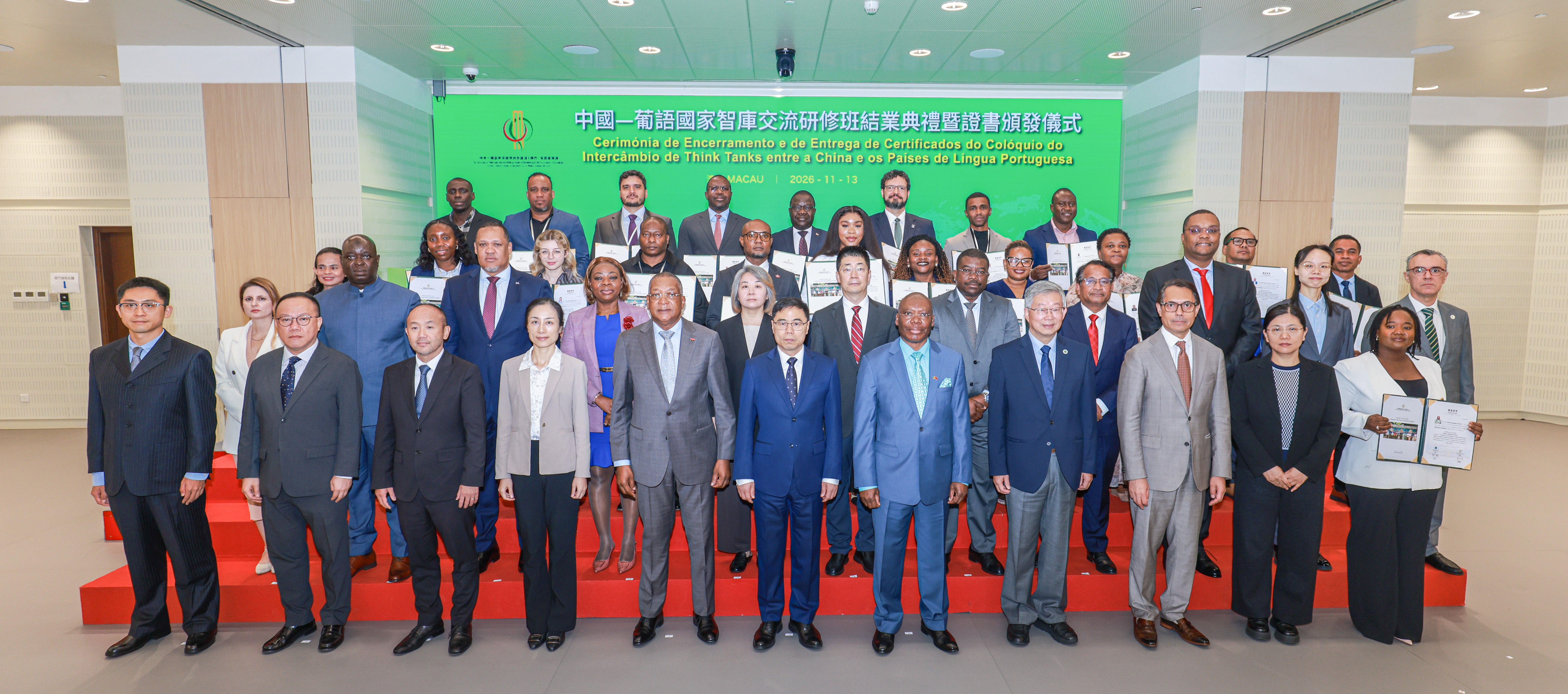
The closing ceremony and certificate presentation for the “Colloquium on Think Tank Exchanges between China and Portuguese-speaking Countries” was held on 13 November at the Press Centre of the Complex of Commerce and Trade Co-operation Platform for China and Portuguese-speaking Countries in Macao. The colloquium was organised by the Permanent Secretariat of the Forum for Economic and Trade Co-operation between China and Portuguese-speaking Countries (Macao) and delivered by the City University of Macau.
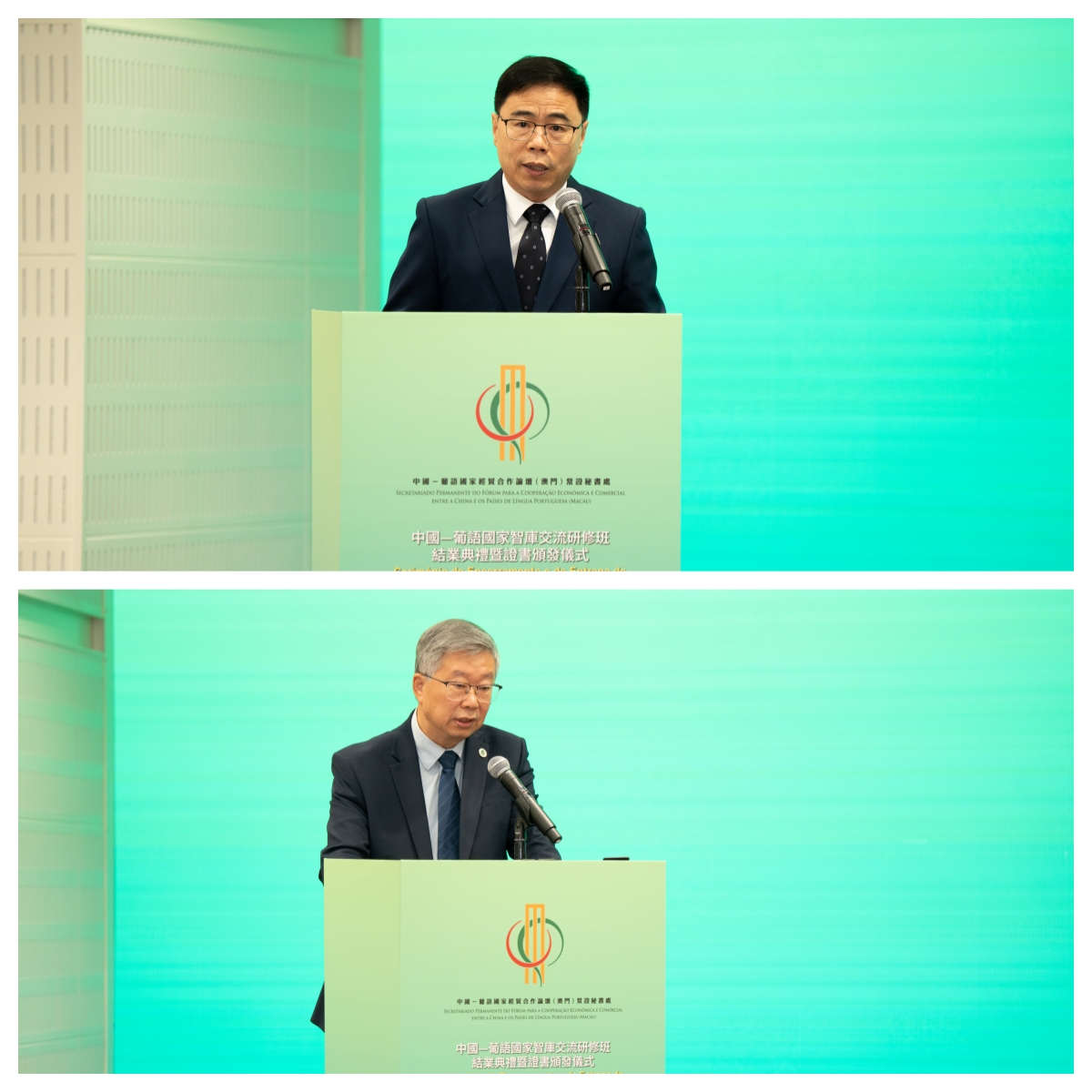
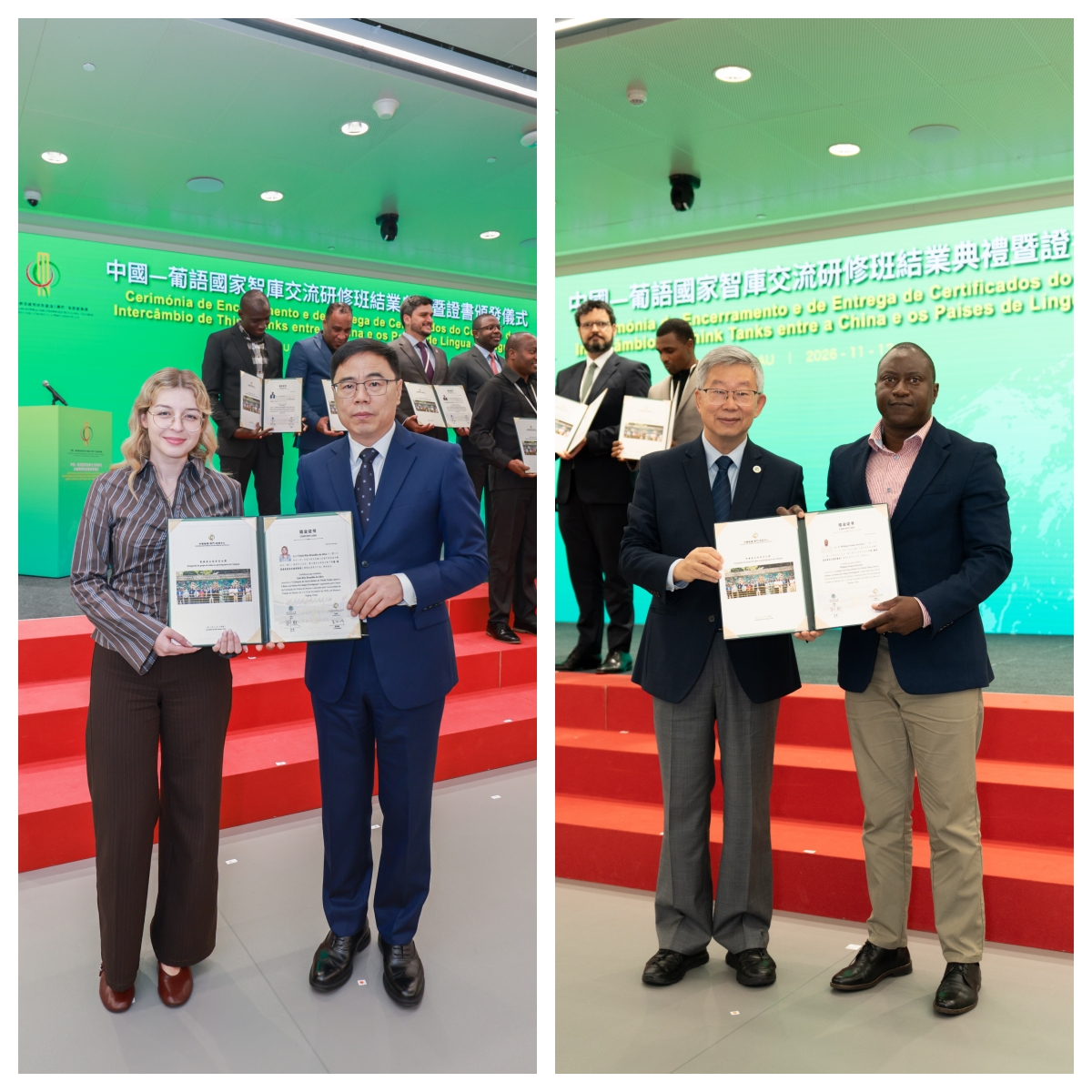
Taking place from 1 to 14 November, the colloquium brought together 20 government officials and senior business executives from nine Portuguese-speaking countries: Angola, Brazil, Cabo Verde, Guinea-Bissau, Equatorial Guinea, Mozambique, Portugal, São Tomé and Príncipe, and Timor-Leste. Speeches at the closing ceremony were delivered by Ji Xianzheng, Secretary-General of the Permanent Secretariat of Forum Macao; Richard Weixing Hu, Vice-Rector of the City University of Macau; and Vanilza Agostinho da Silva, the participants’ rotating representative.
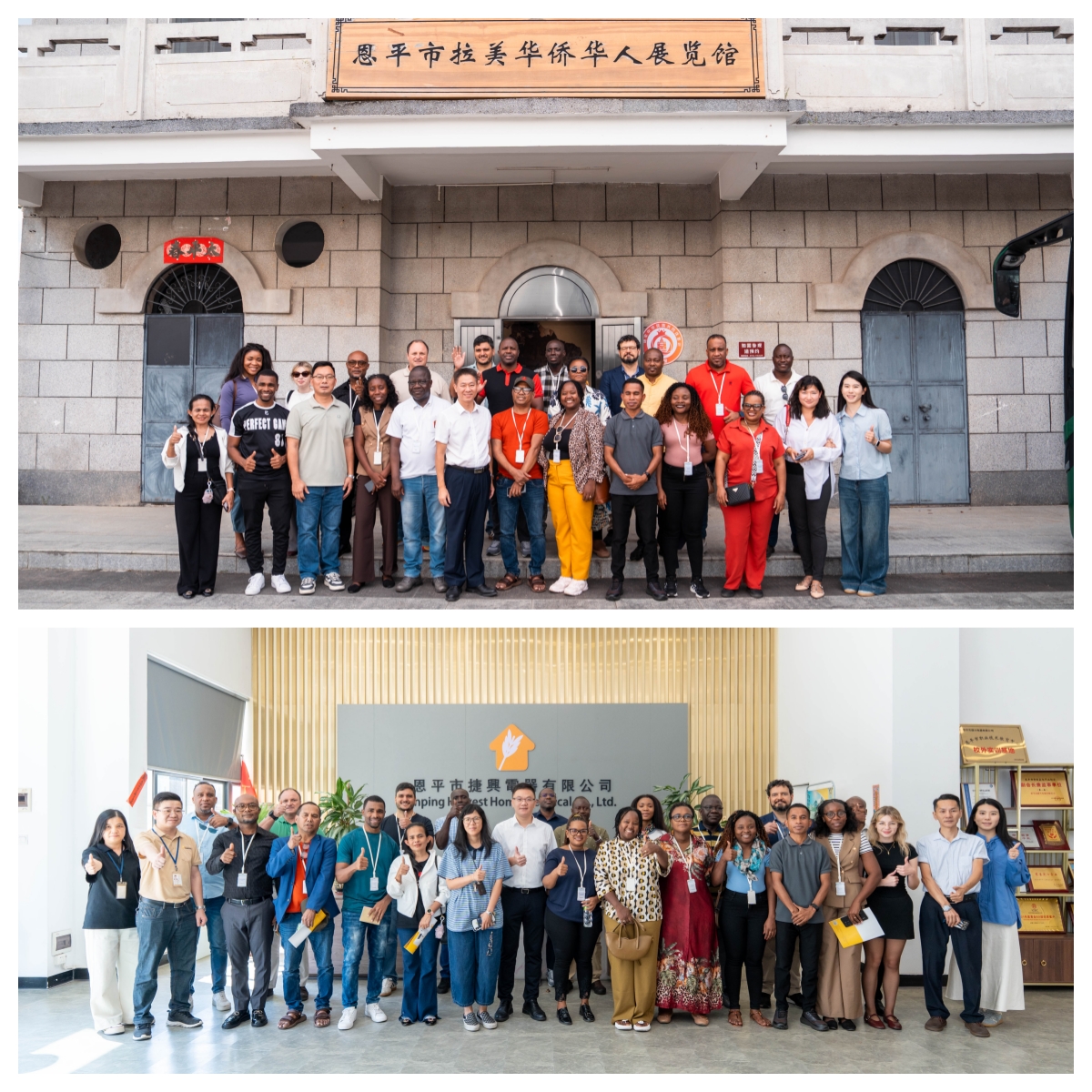
In his speech, Secretary-General Ji Xianzheng said that the colloquium was the fourth organised by the Permanent Secretariat in 2026 and the first dedicated to think tank exchanges. The programme included a visit to Enping, in Guangdong Province. Enping has strong ties with overseas Chinese communities, and its development is representative of that of China’s more than 1,800 counties and cities. The Secretary-General expressed the hope that, through the window provided by Enping, participants would gain first-hand insight into present-day China and take the experiences, observations and reflections gained during the colloquium back to their home countries, playing an active role in deepening exchanges and co-operation between China and Portuguese-speaking countries.
Vice-Rector Hu said that China was currently in the early stage of its 15th Five-Year Plan. The principles emphasised in the plan, including science-based decision-making, modernisation of governance and high-quality development, are areas in which think tanks can make their best contribution. Focusing on state governance, strategic planning and modern think tank management, the colloquium enabled participants to gain first-hand insight into the country’s development and policy-making process. The Vice-Rector expressed the hope that think tank colleagues from different countries would build on this experience to establish a closer exchange network centred on public governance, strategic planning and policy research.
Speaking on behalf of all participants as their rotating representative, Vanilza Agostinho da Silva expressed her gratitude for the opportunity. She said that, over the two weeks of study, participants had shared experiences and learned from one another, strengthening institutional capacity building and paving the way for new initiatives and opportunities for co-operation between China and Portuguese-speaking countries.
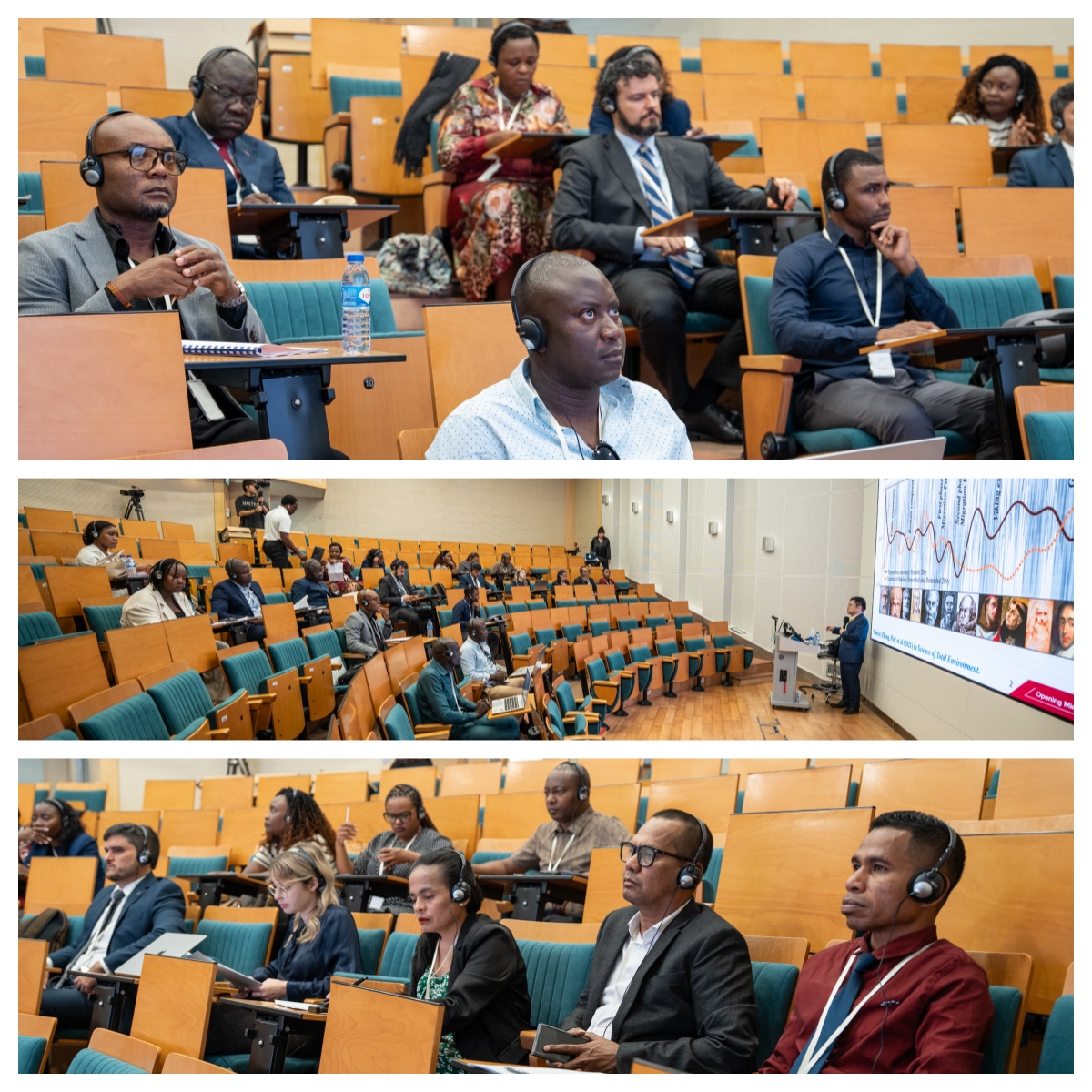
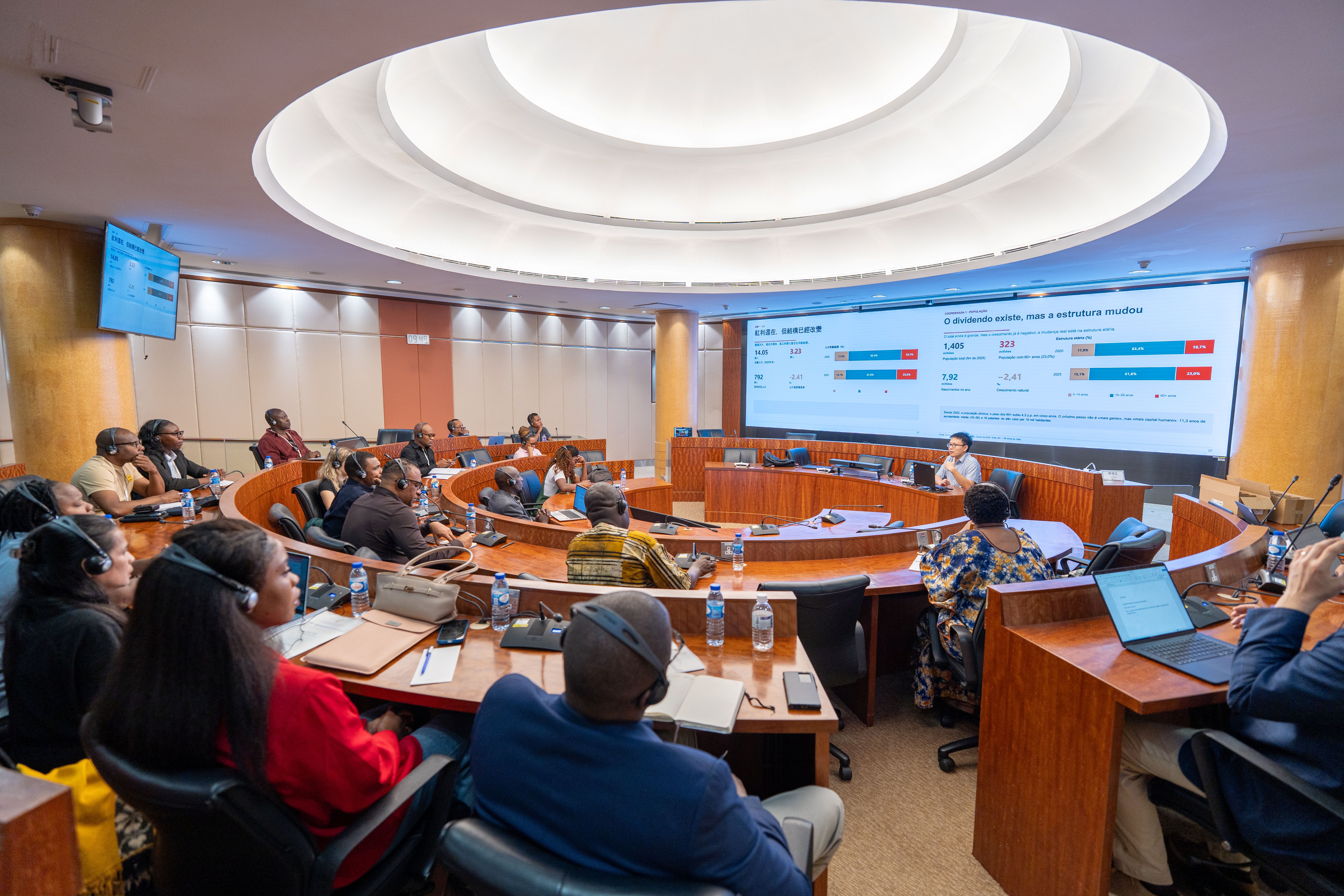
During the programme, participants deepened their knowledge of topics including the Chinese government’s governance experience and the country’s current development, Chinese-style modernisation and strategic planning, international geoeconomics and cross-border trade co-operation, as well as decision-making methods and modern think tank management. During their visit to mainland China, participants travelled to Enping, where they visited smart home appliance companies, industry associations and the University of Southern Guangdong, learning about the local smart home appliance industry and the development of overseas Chinese communities. In Macao, the group visited the Permanent Secretariat, the Commemorative Gallery of the Macao Basic Law and the Macau Development Strategy Research Centre. They also attended a seminar on relations with Brazil and an exchange meeting of the Alliance for China–Portuguese-speaking Countries Co-operation Studies, to deepen their understanding of economic and trade co-operation and think tank exchanges between China and Portuguese-speaking countries.
Guests at the closing ceremony included Eduardo Velasco Galiano, Consul-General of Angola in Macao; Rodrigues Victorino Muebe, Consul-General of Mozambique in Macao; representatives of the Liaison Office of the Central People’s Government in the Macao SAR; representatives of the Office of the Commissioner of the Ministry of Foreign Affairs of the People’s Republic of China in the Macao SAR; and all members of the Permanent Secretariat of Forum Macao.